How to start forex trading for beginners with a demo account first rather than live money
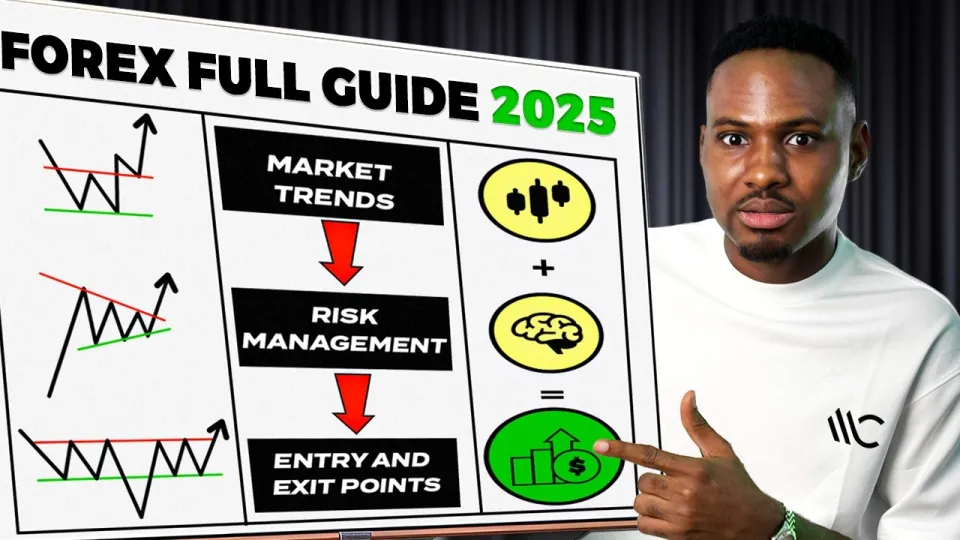
Video: How To Start Forex Trading For Beginners’ 2025 (Full Course)
You can order the same kind of articles for your own video to boost it on YouTube and Google. Just message the Telegram bot @sat_sit_bot. Articles with your video embedded are written and posted by the bot itself — on popular topical sites (no ads). Try it free: 50 articles on us.
· based on the channel Jeffrey Benson Forex
Forex for beginners works best as a sequence, not a shortcut: learn what a currency pair is, open a demo account with a regulated broker, practise one simple strategy on a chart, and only then fund a live account with money you can afford to lose. The full beginner path below follows the structure of the free course published by Jeffrey Benson Forex, and students who want the paid programme can find the plans at Fire Pips FX.
What forex trading actually is and why beginners start there
Forex is the market where national currencies are priced against each other in pairs, and a retail trader profits from the change in that price rather than from holding the currency itself. Every quote has two sides: the base currency on the left and the quote currency on the right, so EUR/USD at 1.0850 means one euro buys 1.0850 US dollars. Buying the pair means you expect the euro to strengthen against the dollar; selling means the opposite.
Three details separate forex from stock trading and shape how a beginner should approach it:
- It is an over-the-counter market. There is no single exchange; banks, funds and brokers trade through a network, and your broker is your counterparty.
- It runs nearly 24 hours a day, five days a week, because the Sydney, Tokyo, London and New York sessions hand over to each other.
- Leverage is built into the product. A small deposit controls a much larger position, which magnifies both gains and losses — the reason risk management matters more here than in almost any other retail market.
Currency prices move on interest-rate decisions, inflation data, employment reports and central-bank commentary. A beginner does not need to forecast those events; the goal is to read the reaction on the chart and trade with a defined risk.
The tools a beginner needs before the first trade
The minimum toolkit is a broker account, a platform, a charting setup and a journal, and none of them requires a large deposit. Most of the work happens before a single order is placed.
- A regulated broker. Check the licence, the regulator, spreads on major pairs, commission, minimum deposit and withdrawal terms. The course recommends Assex Markets and links its registration page at https://my.assexmarkets.com/auth/register?partner_code=1699134; treat any broker recommendation, including that one, as a starting point for your own due diligence.
- MetaTrader 5 (MT5). The platform the course uses for charts, order types and position management. It is free, runs on desktop and mobile, and connects to the broker account through a login and server name.
- A demo account. Identical to a live account except the balance is virtual. This is where a beginner should spend the first weeks: placing orders, testing stop-losses and getting used to the interface without financial consequence.
- A notebook or trading journal. Record the pair, the reason for entry, the stop, the target and the outcome. Reviewing twenty logged trades teaches more than watching twenty more videos.
- An economic calendar. Rate decisions and payrolls data move currencies sharply; knowing when they land prevents accidental exposure.
A practical order of setup: register with the broker, download MT5, open a demo account, add the major pairs to the watchlist, and set the chart to a higher timeframe such as the four-hour before zooming in.
A basic strategy foundation that a beginner can actually follow
A workable beginner strategy is a small set of rules about where to enter, where to exit and where the idea is proven wrong, applied consistently on one or two pairs. The course builds this foundation before showing a live order, which is the right order of operations: strategy first, execution second.
A simple framework that fits that approach:
- Pick one or two pairs with tight spreads, typically EUR/USD or GBP/USD, and ignore everything else until the process is stable.
- Mark the structure. Identify whether price is making higher highs and higher lows or the reverse on the four-hour chart, and note the recent swing high and swing low.
- Wait for a level. Entries are taken at a previous support or resistance, a session high or low, or a pullback into a moving average — not in the middle of nowhere.
- Define the stop first. Place the stop-loss beyond the level that would invalidate the idea, then size the position so that distance equals 1–2% of the account.
- Set a target with at least a 1:1.5 reward-to-risk ratio so that a strategy winning half its trades still ends positive.
- Trade one session. Choose London or New York and skip the quiet hours, because spreads widen and ranges compress outside active sessions.
Backtest the rules on historical charts before risking anything. Fifty manually reviewed setups give a rough win rate and, more importantly, show whether the rules are clear enough to follow without hesitation.
Placing a first trade without breaking the account
A first live trade should be the smallest position the broker allows, placed with a stop-loss attached in the same order ticket. On MT5 the sequence is: open the pair, choose market or pending order, enter the lot size, set the stop-loss and take-profit levels, and confirm. The stop must exist before the position does, not after the price has already moved against you.
Position size is arithmetic, not intuition. If the account holds 1,000 USD and the risk limit is 1%, the maximum loss is 10 USD. If the stop sits 50 pips away and a mini lot (0.1) is worth about 1 USD per pip on EUR/USD, the correct size is 0.2 lots — a 50-pip loss then costs roughly 10 USD. Doing this calculation every time, rather than guessing lot sizes, is what separates a trader from a gambler.
After entry, the job is to manage the trade, not to watch every tick. Move the stop to break-even only when the market has clearly moved in your favour, and let the target do its work.
Mistakes that cost beginners the most money
The most common beginner errors are behavioural rather than analytical, and they repeat across almost every new account. The course devotes a dedicated segment to them, and the pattern is consistent.
- Trading without a stop-loss, or moving it further away when price approaches. One unchecked loss can erase weeks of gains.
- Oversizing after a loss to win the money back quickly. This is the single fastest route to a blown account.
- Revenge trading immediately after a stop-out, usually in the same pair and the same direction.
- Switching strategies after two or three losing trades, so no method ever gets a fair sample.
- Trading during news releases without understanding the spread widening and slippage that come with them.
- Skipping the demo phase because live money feels more motivating. Motivation is cheaper than tuition paid to the market.
A useful guardrail is a daily loss limit, for example 3% of equity, after which the platform is closed for the day regardless of how the trader feels.
Common beginner questions and how to answer them
Beginners tend to ask the same handful of questions before their first deposit, and the honest answers are less exciting than the marketing. How much capital is needed depends on the broker's minimum and the risk rules: with 1% risk per trade, a 100 USD account risks 1 USD per trade, which is workable for practice but too small to generate meaningful income. How long it takes to become consistent is measured in months of logged trades, not days of video watching.
Whether signals can replace learning is the question behind most copy-trading offers, including the free daily signal channel at https://t.me/firepipsignals and the premium group reached through https://t.me/jeffreybenzhelpbot. Signals can show how a professional frames a trade, but following them without understanding the stop and the sizing teaches nothing about what to do when the signal stops arriving. Demo results also differ from live results, because live trading adds spread, slippage and emotion.
The realistic expectation is that the first months are for building a process: one strategy, one journal, one risk limit, reviewed weekly.
Useful links
- Course plans and student access: https://firepipsfx.com/plans
- Free daily signal channel: https://t.me/firepipsignals
- Broker registration used in the course: https://my.assexmarkets.com/auth/register?partner_code=1699134
- Premium signal group access: https://t.me/jeffreybenzhelpbot
Bottom line
Starting forex trading well means treating the first weeks as training rather than income: learn the pairs and sessions, set up a regulated broker and MT5, practise a written strategy on demo, and cap every loss at 1–2% before a live order is ever placed. The beginner course from Jeffrey Benson Forex is a solid free map of that route, covering market mechanics, tools, strategy foundations, a first trade and the mistakes that empty accounts. If you want structured tuition beyond the free material, the student plans are available at Fire Pips FX. Whatever path you choose, the discipline of the stop-loss and the journal will matter more than any indicator.
Key takeaways
- Forex is an over-the-counter market where currencies are quoted in pairs such as EUR/USD, and retail traders speculate on price changes rather than buying physical cash.
- A beginner needs three things before risking money: a regulated broker account, a trading platform such as MetaTrader 5, and a demo account for practice.
- The four sessions — Sydney, Tokyo, London and New York — overlap in specific windows, and the London–New York overlap is the most liquid part of the day.
- Risk per trade is usually capped at 1–2% of account equity, with a stop-loss set before entry rather than after.
- Jeffrey Benson Forex structures its beginner course around market basics, tools, a strategy foundation, a first trade and a list of common mistakes.
Questions & answers
How much money do I need to start forex trading?
It depends on the broker's minimum deposit and your risk rules, not on a fixed number. With 1% risk per trade, a 100 USD account risks 1 USD per position, which is enough to practise the process but not to earn a living. Many beginners start on demo and fund a live account only once the strategy has a logged track record.
Can I skip the demo account and go straight to live trading?
You can, but it is expensive tuition. A demo account lets you learn the platform, order types and stop placement without losing money, and it exposes whether your rules are clear enough to follow. The usual recommendation is several weeks of demo trading with a journal before the first small live position.
Is copying signals a substitute for learning forex?
No. Signals can show how an experienced trader frames an entry, a stop and a target, but following them blindly teaches nothing about sizing or what to do when a signal fails. Treat signals as a study aid alongside your own demo trades, not as a replacement for a written strategy.
Which trading session should a beginner focus on?
London and New York are the most liquid, and their overlap is where most of the daily range forms on major pairs. Trading one session consistently is easier than watching the market around the clock, and it keeps you away from the thin liquidity of the late Asian hours.
Source: How To Start Forex Trading For Beginners’ 2025 (Full Course) · Markdown version