What is a meme coin and how do top traders actually make money on it?
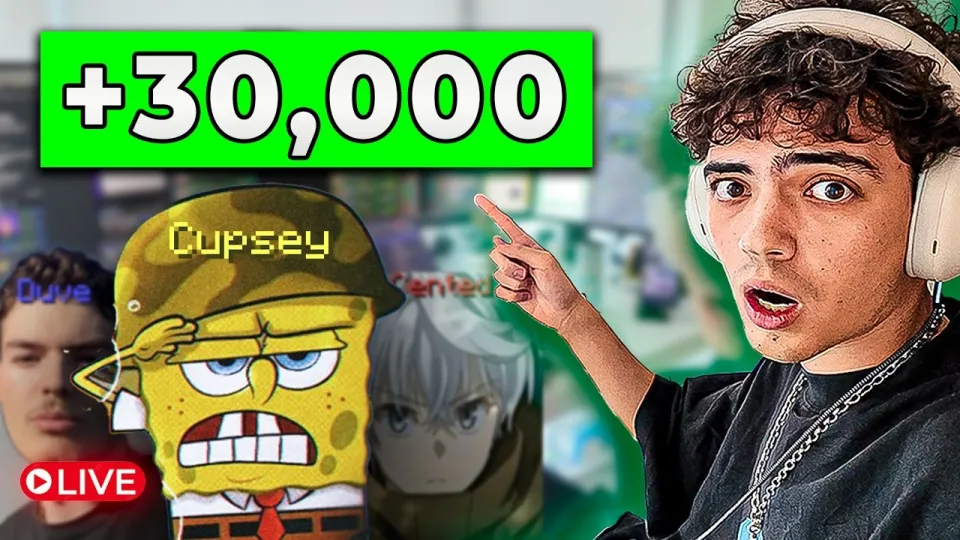
Video: I Traded With The World’s #1 Memecoin Trader
You can order the same kind of articles for your own video to boost it on YouTube and Google. Just message the Telegram bot @sat_sit_bot. Articles with your video embedded are written and posted by the bot itself — on popular topical sites (no ads). Try it free: 50 articles on us.
· based on the channel Ethan Prosper
A meme coin is a cryptocurrency with no product, revenue or roadmap behind it — its price is set entirely by attention, liquidity and the flow of buyers and sellers. Traders make money on it by entering early on new Solana launches, sizing positions so a single loss cannot end the account, and exiting into the crowd rather than holding for a thesis. The fastest route into that workflow is a trading terminal such as Padre, where you can register and trade Solana memecoins, rather than a spot exchange listing page.
The format of the Ethan Prosper video with trader Cupsey is a useful reality check: a single session covering a handful of launches, with results reported in SOL and dollars rather than in percentages of a long-term portfolio.
What a meme coin actually is and what moves its price
A meme coin is a token whose value rests on narrative and liquidity, not on discounted future cash flows. That single fact explains almost everything about how it trades: there is no earnings report to anchor a valuation, so price discovery happens in minutes and is driven by who is buying, how much liquidity sits in the pool, and whether the dev or early wallets are selling.
Three forces set the price of a fresh launch:
- Liquidity depth. On a bonding-curve launchpad, the pool starts tiny, so a few SOL of buying can move price violently in both directions.
- Holder distribution. If one wallet holds a large share of supply, that wallet is the market. Top traders check the distribution before entering, not after.
- Attention flow. Social mentions, a recognizable ticker and a credible dev history pull in the next wave of buyers — which is exactly who an early entrant needs to sell to.
This is why experienced participants describe the game as execution rather than investing. The token is the instrument; the edge is in reading flow and managing risk.
How the top-ranked traders in the video actually operate
Top memecoin traders run a repeatable process on Solana, not a set of hunches. The video with Cupsey shows the shape of that process across several trades: an early entry on a launch called Lobo and a token referred to as 1%, a Grok-themed bot coin that produced roughly $15K, a dev-related play around a "magic internet money" token, and a Mosaic AI coin that added about 80 SOL.
The mechanics behind those numbers look like this:
- Launchpad first. New pairs appear on pump.fun-style platforms, where the token trades on a bonding curve before any exchange listing exists.
- Terminal execution. Orders are routed through a dedicated terminal — Axiom and Padre are the two named in the video's own resources — because a standard exchange interface is too slow and lacks the on-chain data.
- Wallet clustering. Traders watch which wallets are accumulating: known profitable addresses, dev wallets, and clusters that historically move together.
- Fast exits. Positions are scaled out into strength; holding a new pair through a full cycle is the exception, not the plan.
A reported +200 SOL on the opening trades is not the result of one brilliant call. It is the sum of many small, fast decisions with strict limits on how much can be lost per attempt.
Why the speed-trading style is the hardest one to copy
The style shown in the video — ten-plus hours in front of a terminal, dozens of launches a day — is the most difficult version of crypto trading that exists. It requires fast fingers, pre-built wallet setups, tolerance for repeated small losses, and the discipline to stop when a session goes badly.
What makes it hard to replicate:
- Latency and tooling. Professional terminals, custom shortcuts and pre-funded wallets shave seconds that retail users spend clicking.
- Information asymmetry. Insider and multi-wallet participation means some buyers know the dev, the launch schedule or the next narrative before it is public.
- Capital structure. A trader who can risk 5 SOL per attempt and survive twenty failed attempts plays a different game from someone risking their last 1.3 SOL.
- Emotional load. Watching a position double and then round-trip to zero in ninety seconds breaks most plans that were not written down in advance.
None of this means memecoins are untradeable for a smaller account. It means the honest comparison is not "copy the trade" but "copy the process at a size you can afford to lose."
Common questions from viewers of these sessions
The questions that come up most often under this kind of content are about feasibility, not theory. Viewers ask how much capital is needed, whether the trades can be copied, and what a "faucet" or a "cook" actually refers to in the trader's slang.
The short answers:
- Starting capital. A realistic starting bankroll for learning the workflow is small — a fraction of a SOL — because the goal of the first weeks is to learn execution and exit discipline, not to compound.
- Copy trading. Mirroring a wallet is possible on-chain, but you inherit their entry price only if you are faster than the crowd watching the same address. Most copiers buy the top of a move.
- Slang. A "cook" in this context means a coordinated push on a token; a "faucet" refers to a source of fresh capital or a stream of new launches feeding the desk.
- The multi-wallet critique. It is fair. Large players do split capital across wallets, and that structure is a real advantage that retail cannot fully match.
A more sustainable alternative, and one worth taking seriously: trade larger, more liquid coins with a slower timeframe, and use memecoins as a small satellite allocation rather than the whole strategy.
A practical checklist before you buy any meme coin
A meme coin trade should be defined before the buy button is pressed, because once price starts moving the decision-making quality collapses. Write the plan first, then execute it mechanically.
- Check the contract and the dev. Look at the deployer's history: previous launches, whether they were abandoned, and whether the dev wallet still holds supply.
- Read the holder list. Identify the top ten wallets and whether they are linked. A single cluster holding a large share is an exit signal.
- Set the loss limit in SOL, not in percent. Decide the maximum you will lose on the attempt and size the position from that number.
- Define the exit before entry. A first partial sale at a set multiple, a stop below the entry, and a rule for what happens if liquidity drops.
- Log the result. Track every attempt with entry, exit and reason. The log is what turns a gambling session into a skill.
Anyone who has watched a room full of traders turn a few SOL into a few hundred SOL should notice that the visible wins are reported and the invisible losses are not. The checklist exists to keep the second category small.
Useful links from the session
These are the resources listed alongside the video: a Solana trading terminal for execution, the creator's link hub, the guest trader's social profile, and two communities for discussion.
- Trade Solana memecoins on Padre (registration via the link)
- Ethan Prosper's link hub
- Cupsey on X
- SOLMAFIA Discord community
- Pastel paid Discord
Bottom line
A meme coin is an attention instrument, and the traders who profit from it treat it that way: fast entries, defined exits, and a bankroll small enough that no single launch matters. The session documented by Ethan Prosper, trading alongside Cupsey, shows the upside clearly — hundreds of SOL across a handful of plays — but it also shows how narrow the window is and how much infrastructure sits behind each click. The realistic takeaway for most readers is to learn the workflow on a small size, keep memecoins as a satellite position, and never let a single launch decide the fate of the account. If you want to test the execution side yourself, start with a Padre terminal registration and fund it with an amount you are prepared to lose entirely.
Key takeaways
- A meme coin is a token with no cash flow or product behind it — price is driven purely by attention, liquidity and holder flow.
- In the Ethan Prosper video with Cupsey, the session produced roughly +200 SOL on the first trades, +80 SOL on Mosaic AI and about +$15K on a Grok-themed launch.
- Top traders work on Solana launchpads such as pump.fun and execute through terminals like Axiom and Padre, not through a standard exchange app.
- The edge is speed and risk limits: small initial size, fast exits, and treating every position as expendable capital.
- Most viewers of such videos lose money copying trades — the multi-wallet and insider advantage is real and hard to replicate.
Questions & answers
How much money do you need to start trading meme coins?
You can start with a fraction of a SOL, because the point of the first weeks is learning execution and exit discipline rather than compounding. Size positions so that a total loss on any single launch has no effect on your ability to keep trading. Trading with your last remaining SOL is the fastest way to make emotional decisions.
Can you make money copying the wallets of top memecoin traders?
Copy trading works mechanically, but you rarely get their entry price — by the time a wallet's buy is visible, the price has usually moved. Copiers tend to buy the top of a move and exit after the original trader has already sold. It is a tool for study, not a substitute for your own exit rules.
Why do some traders use multiple wallets?
Splitting capital across wallets lets large players enter a launch from several addresses, manage supply distribution and avoid showing a single dominant position. It is a structural advantage that smaller traders cannot fully replicate, and it is a legitimate reason to be skeptical of screenshots showing enormous percentage gains.
Are meme coins a good investment or just gambling?
Most meme coins have no cash flow, so holding one long term is a bet on continued attention rather than on fundamentals. Treating them as a small, expendable satellite allocation with written exit rules is closer to trading; treating them as a savings plan is closer to gambling. The traders in these videos operate on a timescale of minutes.
Source: I Traded With The World’s #1 Memecoin Trader · Markdown version